
Sports Card Value Scanner
The App DudeSports
4.495.00 Reviews
- Version
- 2.7
- Installs
- 50.00K
- Age Rating
- Everyone
Screenshots
Our Review of Sports Card Value Scanner
 Analysis by Appyee
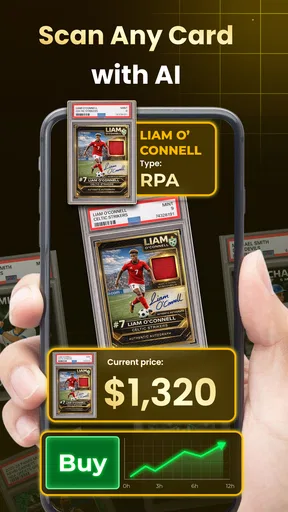
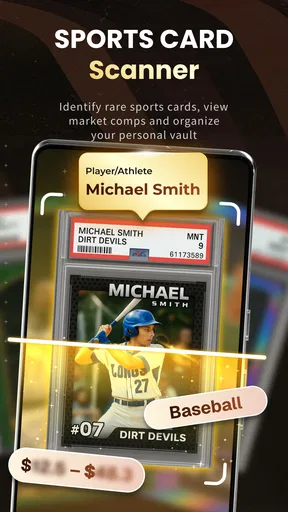
I like sports card apps that solve a specific problem without pretending to replace the whole hobby. Sports Card Value Scanner takes that focused approach: it is built for scanning cards, checking estimated values, comparing recent sales, and keeping a collection more organized. After using it as a practical companion rather than a complete marketplace, I found the idea easy to understand and genuinely useful when I needed a quick reference while sorting cards.
The app comes from The App Dude and sits in the sports category. It is free to download, with optional purchases ranging from a few dollars to several dozen dollars per item. That combination makes it approachable for someone who wants to test the workflow before spending anything, although frequent scanning or deeper tools may eventually make the paid options relevant. The age rating is Everyone, and the app supports devices running Android 8.0 or later.
Its public reception is encouraging without being a reason to stop thinking critically. It holds an average rating of 4.4 from around two thousand ratings, with roughly a hundred written reviews, and has passed fifty thousand installs. Those figures suggest that the basic idea is connecting with collectors, but they do not remove the need to check each card carefully. A scanner can speed up identification; it cannot make condition, authenticity, scarcity, or market timing irrelevant.
What the scanner is really useful for
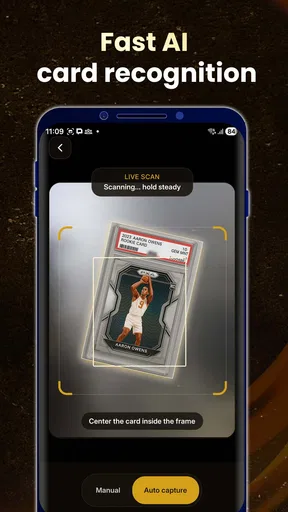
The strongest part of the experience is the change in pace. Without a tool like this, I would normally identify a card, open a browser, search several variations of the player and set name, and then try to work out whether the prices I found referred to the same version. Scanning gives that first step a more direct shape. Instead of treating a box of cards as a research project, I can use the app to create a starting point for each card.
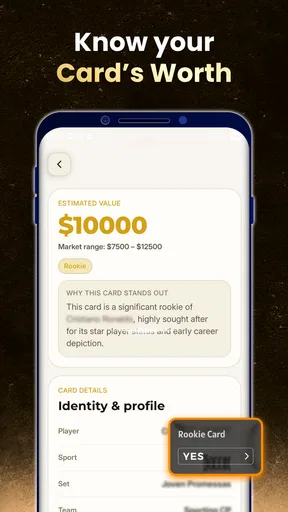
That matters most when the collection is mixed. A pile may contain current stars, older cards, duplicates, inserts, base cards, and pieces whose value depends heavily on a small detail. Looking at every card manually is tiring, so a quick scan helps separate cards that deserve closer attention from cards that can simply be logged. I would not use the first displayed value as a final selling price, but I would use it to decide where to spend my time.
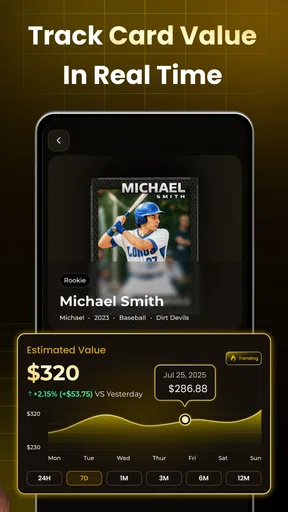
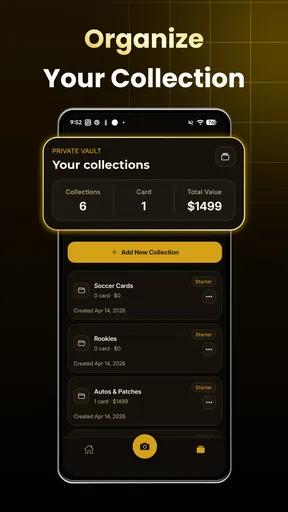
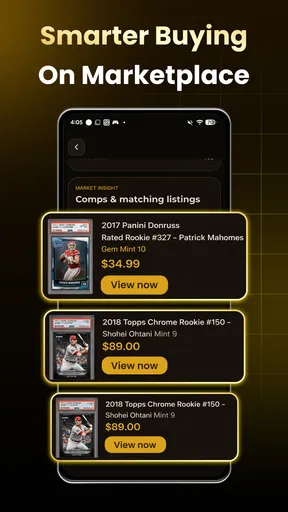
The app also makes more sense as a collection-management tool than as a one-tap valuation machine. The ability to track comparable sales and organize cards gives a collector a way to build context over time. A single number can be misleading; a group of comparable transactions is more useful because it shows whether an apparent value is supported by actual market activity.
One practical workflow is to scan a new purchase before putting it away. I can record what I have while the cards are still in front of me, note which ones need a closer condition check, and avoid rediscovering the same cards months later. For someone who buys small lots, attends card shows, or receives inherited collections, that simple habit can prevent duplicates and reduce the chance of overlooking a card with a meaningful variation.
Where it saves time, and where it cannot do the thinking
Scanning is most helpful when the card is recognizable and the goal is triage. It is less decisive when two cards look almost identical but differ by parallel, print run, autograph status, error, grading, or condition. In those situations, I treat the result as a lead, not a verdict. I check the visible details myself before adding a value to my records or using it in a negotiation.
This is an important trade-off. A manual search is slower, but it forces me to examine the card and compare exact matches. The scanner is faster, but speed can encourage false confidence. My advice is to use it in two passes: scan everything first, then manually verify the cards that appear valuable, unusual, or difficult to identify.
Another useful habit is separating “identified” from “ready to sell.” Identification answers what the card appears to be. A selling decision also depends on centering, corners, surface, edges, grading, shipping costs, buyer demand, and the difference between an asking price and a completed sale. The app’s value and comps can support that decision, but they should not replace it.
Trust, controls, and moments that deserve care
For a collection app, trust is not only about whether the scanner recognizes a card. It is also about how comfortable I feel using the app repeatedly, what choices are visible, and whether I can control my own records. I prefer tools that make their main actions understandable: scan a card, inspect the result, save it, and review the collection later. Sports Card Value Scanner benefits from having a narrow purpose, because I can judge the usefulness of each step instead of navigating an oversized social or marketplace system.
The developer is listed as The App Dude, and the current release is version 2.7. That gives users a clear point of reference when checking compatibility or deciding whether their installation is current. I would still keep the operating system updated where possible, especially on an older device, because camera-based apps can feel less reliable when the phone itself is struggling with storage, focus, or performance.
When I use any card scanner, the most data-sensitive moment is the scan itself. The camera is pointed at a physical card, and the image may contain more than the central name or design if the surroundings are visible. I therefore scan on a clean surface and keep unrelated documents, labels, or personal notes out of the frame. This is a small practical precaution, but it is a good way to reduce accidental exposure when using any camera-based utility.
I also pay attention to the difference between a free download and a completely free experience. Sports Card Value Scanner is free to start, while in-app purchases are available at several price points. That is not automatically a problem, but I would look closely at what a paid option unlocks before buying it. A collector who scans occasionally may be satisfied with the basic workflow, while someone processing a large backlog may find the purchase more worthwhile. The right choice depends on frequency, not on the mere presence of a payment screen.
Because the app is rated Everyone, it is presented as suitable for a broad audience. That makes it approachable for families and younger collectors, but adults should still guide children through purchases and valuation decisions. A displayed estimate can look authoritative to someone new to the hobby. I would explain that prices move and that a card’s condition must be judged carefully before treating any number as a promise.
Keeping control of a collection
The collection-organizing side is where user agency matters most. I want my records to reflect my own decisions, not just whatever the first scan suggests. After scanning, I would review the card name, confirm the edition, and decide whether to keep it in the main collection, mark it for further research, or leave it out until I can verify the details. This extra step prevents an incorrect match from quietly becoming part of the collection history.
I would also avoid treating the app as the only place where important information exists. For a valuable collection, maintaining a separate personal record of purchase context, condition notes, and storage location is sensible. The app can be the convenient working catalog, while a second record protects against confusion if I reorganize boxes or revisit the collection after a long break.
A particularly useful approach is to organize by decision rather than only by sport or player. I might keep one group for cards that need condition review, another for cards I may sell, and another for cards I want to retain. That turns the scanner into part of a workflow instead of a passive database. It also helps me avoid a common mistake: spending time researching every card equally when only a small portion of the collection needs detailed attention.
Before making a purchase at a show, I would use the app as a negotiation aid, not as a bargaining weapon. I can scan a card, inspect comparable sales, and then ask whether the seller’s price makes sense for that exact version and condition. If the match is uncertain, I would say so and slow down. The app is most valuable when it helps me ask better questions, not when it encourages me to announce a number with more confidence than the evidence deserves.
How it compares with ordinary alternatives
The usual alternative is a browser, a spreadsheet, and a lot of manual searching. That approach remains better for unusual cards, detailed research, and long-term records that need custom fields. A spreadsheet can capture acquisition cost, storage box, condition notes, and selling status in exactly the format I choose. It is also easier to audit because I can see how each entry was created.
Sports Card Value Scanner is more convenient at the beginning of the process. It reduces the friction between holding a card and getting a useful research starting point. For a large unsorted group, that convenience is significant. I would choose it over a spreadsheet alone when speed matters, then use a spreadsheet or personal notes for the cards that deserve a deeper paper trail.
Manual marketplace research is still the better option when the card is rare, graded, autographed, or visually close to several variations. In those cases, exact comparison matters more than speed. I would also favor manual checking before listing an expensive card, because the difference between an active listing and a completed transaction can change the practical value considerably.
The app is therefore not a replacement for every tool. It occupies a useful middle ground: faster than starting from a blank search page, but less comprehensive than a carefully maintained specialist database or personal inventory system. That balance is appealing to casual collectors and growing collections, while advanced sellers may want to pair it with more detailed records.
Everyday use cases that make the app worthwhile
Imagine finding several boxes of cards after moving house. The first challenge is not selling; it is understanding what is there. I would work through one box at a time, scanning cards into a rough inventory and setting aside anything that looks difficult to match. The app would help me create order quickly, while the manual second pass would handle condition and variation checks. That is a realistic situation where convenience has more value than perfect automation.
For a parent and child sorting a collection together, the app can make the activity more interactive. A child can learn to identify players and sets, while an adult explains why a value estimate is only a starting point. I would keep purchases protected and turn the process into a lesson about comparing evidence rather than chasing the highest number on a screen.
For a collector preparing for a trade, I would scan the cards beforehand and review the comparable sales instead of relying on memory. I would then separate cards into “confident match” and “needs checking” groups. That small distinction reduces awkward surprises during the trade and makes it easier to explain why two cards featuring the same player may not have the same value.
For someone who buys cards regularly, the organizing function may be more important than the first scan. Repeatedly recording new cards creates a habit and makes duplicates easier to spot. The benefit grows when the collection is active, but a person with only a handful of cards may not need a dedicated tool at all. In that case, manual notes could be simpler and less effort.
There is also a useful stopping rule. If a scan produces an uncertain result, I would not keep rescanning the same card endlessly. I would photograph or note the visible details, move it to a review group, and continue with the rest. This keeps the app from becoming a bottleneck and preserves the main advantage of scanning: processing a collection efficiently.
Who should use it, and who should look elsewhere
I would recommend it to new collectors who want an easier starting point, families sorting cards together, and hobbyists who need to bring order to a growing collection. It is especially suitable for people who want quick identification and market context without building a complicated system from scratch.
I would be more cautious about recommending it as the only tool for professional sellers, high-value collections, or cards with complicated variations. Those users need careful condition records, exact matching, and a reliable way to document why a valuation was chosen. The app can still help with the first pass, but it should sit alongside manual verification rather than replace it.
I would also skip it if I rarely collect cards and do not expect to scan more than a few. Installing a dedicated app may add unnecessary organization to a hobby that is perfectly manageable with notes and occasional web searches. The free entry point makes trying it low-risk, but usefulness still depends on having enough cards or enough curiosity to justify a repeatable workflow.
My cautious verdict
Sports Card Value Scanner succeeds because it focuses on a real frustration: turning a scattered pile of sports cards into something searchable and easier to understand. I appreciate the combination of scanning, comparable-sale context, and collection organization. In my experience, the best results come when I use the app to sort priorities, then apply human judgment to the cards that matter most.
The main limitation is also clear. A scan is not authentication, grading, or a guaranteed sale price. The more unusual or valuable the card, the more important it becomes to verify the exact version and condition independently. That is not a failure unique to this app; it is simply the reality of card collecting. Still, users should know the boundary before allowing convenience to become overconfidence.
The free starting point is sensible for testing the workflow, while the optional purchases give frequent users a path to spend more if the available tools justify it. I would begin with a small batch rather than importing an entire collection immediately. Check whether the results are easy to review, whether the organization fits your habits, and whether the app saves enough time to earn a regular place in your routine.
My recommendation is positive but measured: use it as a first-pass scanner and collection assistant, not as the final authority on value. If you want a faster way to sort cards, compare market context, and decide which pieces deserve deeper research, it is worth trying. If your priority is exhaustive documentation, specialist-level verification, or a fully custom inventory, pair it with manual research or choose a more detailed system. The smartest workflow is to let the app narrow the work, while you remain in control of the final decision.
Verdict
Strengths of Sports Card Value Scanner
- Quickly identifies many sports cards using your phone’s camera.
- Useful for estimating card values before selling or trading.
- Supports collection tracking in one convenient mobile app.
- Helps spot valuable cards that may otherwise be overlooked.
- Simple interface makes scanning accessible to casual collectors.
Limitations of Sports Card Value Scanner
- Recognition may struggle with damaged, rare, or poorly photographed cards.
- Estimated prices can differ from current auction and dealer offers.
- Some features or scans may require a paid subscription.
- Market values can change quickly, making estimates outdated.
- Requires a stable internet connection for database lookups.
Other Releases by The App Dude
View All
ComicID: Comic Book Scanner
Comics3.9
Similar Picks in This Category
View All
BeSoccer: Soccer Live Score
BeSoccer apps4.3

Cricbuzz - Live Cricket Scores
Cricbuzz.com3.7

NFL
NFL Enterprises LLC2.4

Da Fit
MO YOUNG LIMITED3.6

ESPN
Disney4.5

LiveScore: Live Sports Scores
LiveScore Limited4.5
Frequently Asked Questions
What is Sports Card Value Scanner used for?
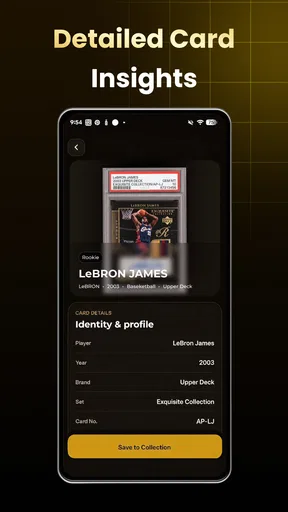
Sports Card Value Scanner is designed to help collectors identify sports trading cards and estimate their current market value. After scanning or searching for a card, the app may provide information such as the player, set, year, card number, recent sales data, and estimated prices. It is useful for quickly organizing a collection and spotting cards that may deserve further research.
How accurate are the prices shown by Sports Card Value Scanner?
The values shown by Sports Card Value Scanner should be treated as estimates rather than guaranteed selling prices. Card condition, grading, centering, rarity, print variations, autograph or memorabilia details, and current buyer demand can significantly change the final value. For expensive cards, compare the app’s estimate with recent completed marketplace sales and consider professional grading information.
Can the app scan every sports card automatically?
The scanner can recognize many popular baseball, basketball, football, hockey, and other sports cards, but recognition is not guaranteed for every item. Older releases, uncommon regional sets, damaged cards, parallel versions, inserts, promotional cards, and cards with poor lighting may require manual searching. Taking a clear, straight-on photo and checking the detected details can improve the results.
Does Sports Card Value Scanner require a subscription or include in-app purchases?
Depending on the version and platform, Sports Card Value Scanner may offer certain features for free while reserving advanced tools, unlimited scans, detailed price history, or collection management options for a paid plan or in-app purchase. Before downloading, review the current App Store or Google Play listing and the subscription terms, including renewal conditions and available cancellation options.
Is Sports Card Value Scanner suitable for buying or selling valuable cards?
The app can be a convenient starting point when evaluating cards, building an inventory, or deciding which items need closer attention. However, it should not be the only source used for high-value transactions. Confirm the exact card variation, inspect its condition, verify comparable completed sales, and account for marketplace fees, shipping, authentication, and grading before setting a purchase or selling price.
